
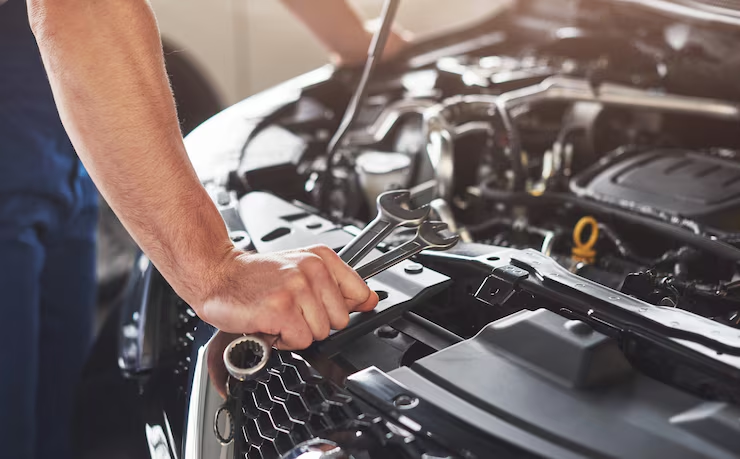


A car losing power on the road is unsettling. One moment the vehicle accelerates normally, and the next it hesitates, struggles on hills, or feels sluggish when you press the pedal. This problem has many possible causes, ranging from a clogged filter to a failing sensor. Understanding how these causes work can help you describe the symptoms accurately and decide how urgently the car needs attention.
This guide explains what is usually happening when a car loses power, which parts are most often involved, and what to do if it happens while you are driving.
What Does It Mean When Your Car Is Losing Power?
An engine produces power by burning a precise mixture of air and fuel, igniting it at the right moment, and expelling the exhaust. If any part of that cycle is disrupted, the engine cannot produce its normal output. Drivers usually notice this as slow acceleration, jerking, stalling, or a car that cannot hold speed uphill.
Mechanics often group these symptoms under the broader heading of engine performance problems. The underlying issue may be gradual, such as a filter that clogs over months, or sudden, such as a failed sensor. Identifying which pattern you are seeing is a useful first step.
Common Causes of Loss of Engine Power
Most cases of loss of engine power trace back to one of the systems below.
Fuel System Problems
The engine needs a steady supply of clean fuel at the correct pressure. A clogged fuel filter, a weak fuel pump, or dirty fuel injectors can all restrict that supply. The typical symptom is power loss under heavy demand, such as accelerating onto a highway or climbing a slope, because the engine needs more fuel at those moments than the system can deliver.
Air Intake and Airflow Issues
An engine also needs a controlled flow of air. A dirty air filter, a contaminated mass airflow sensor, or a leak in the intake hose can upset the air and fuel balance. The result may be rough running, reduced acceleration, and lower fuel economy.
Ignition System Faults
Worn spark plugs, failing ignition coils, or damaged wiring can cause misfires. A misfire means one or more cylinders are not burning fuel properly. You may feel shaking or stumbling, and the engine will feel noticeably weaker. Ignition components are wear items, so they are a common source of declining vehicle performance in higher mileage cars.
Exhaust and Catalytic Converter Blockages
Exhaust gases must leave the engine freely. A clogged catalytic converter creates back pressure, which makes the engine work harder and lose power, particularly at higher speeds. Other signs can include a sulfur smell, excess heat under the car, or a rattling noise from the exhaust.
Sensor and Electronic Faults
Modern engines rely on sensors to measure airflow, oxygen levels, throttle position, and more. When a sensor sends inaccurate data, the engine control unit may adjust fuel or timing incorrectly. Some cars also enter a protective reduced power mode, often called limp mode, when the system detects a serious fault. A check engine light usually accompanies this.
Transmission and Drivetrain Problems
Sometimes the engine is fine, but power does not reach the wheels effectively. A slipping automatic transmission or a worn clutch can feel like a loss of power, with the engine revving but the car not accelerating as expected.
Quick Reference: Symptoms and Likely Causes
The table below links common symptoms with typical causes. It is a guide only, and a proper diagnosis requires inspection and testing.
| Symptom | Possible Cause | Typical Next Step |
| Hesitation when accelerating | Clogged fuel filter or weak fuel pump | Fuel pressure test |
| Shaking or rough idle | Worn spark plugs or ignition coil | Spark plug and coil inspection |
| Weak power at highway speed | Blocked catalytic converter | Exhaust back pressure test |
| Poor fuel economy with sluggishness | Dirty air filter or airflow sensor | Intake system check |
| Check engine light with reduced power | Sensor or electronic fault | Diagnostic code scan |
| Engine revs but car does not accelerate | Transmission or clutch slipping | Transmission inspection |
Warning Signs to Watch For
Power loss rarely appears without other clues. Pay attention to the following:
- A check engine light or other dashboard warning
- Unusual noises such as knocking, hissing, or rattling
- Smoke or a strong smell from the exhaust
- Jerking or surging at steady speeds
- Difficulty starting the engine
- A noticeable drop in fuel economy
Noting when the problem occurs, for example only when the engine is cold or only uphill, gives a mechanic valuable information.
What to Do If Your Car Loses Power While Driving
If your car loses power on the road, safety comes first.
- Turn on your hazard lights so other drivers can see you.
- Take your foot off the accelerator and let the car slow gradually.
- Steer toward a safe shoulder or side road. Power steering and brakes may feel heavier without engine assistance, so apply firm, steady pressure.
- Stop in a safe location and switch off the engine.
- Check for warning lights, then call for assistance rather than continuing to drive if the problem is severe.
Continuing to drive with a serious fault can cause additional damage, for example when a misfire sends unburned fuel into the exhaust and overheats the catalytic converter.
Can You Prevent Engine Performance Problems?
Not every failure can be avoided, but regular maintenance reduces the likelihood of many of them. Following the service schedule in your owner’s manual is the most reliable approach. In practice this means:
- Replacing air, fuel, and oil filters at the recommended intervals
- Changing spark plugs when they reach their service life
- Using fuel of a suitable quality and avoiding running the tank very low
- Addressing a check engine light promptly instead of waiting
- Having unusual noises or changes in vehicle performance inspected early
Small issues tend to be less costly to correct when they are caught early.
When to Have a Mechanic Inspect Your Vehicle
Some causes, such as a dirty air filter, are simple. Others require diagnostic equipment to separate overlapping symptoms. A fuel delivery fault and a failing ignition coil, for instance, can feel nearly identical from the driver’s seat. A professional inspection typically involves reading stored fault codes, checking live sensor data, and testing the fuel, ignition, and exhaust systems to find the actual cause rather than guessing. If the problem is recurring, getting worse, or accompanied by a warning light, it is sensible to book an inspection soon.
Conclusion
A car losing power can result from fuel, air, ignition, exhaust, electronic, or drivetrain problems, and the symptoms often overlap. Paying attention to when the problem occurs, keeping up with routine maintenance, and acting on warning signs can limit both the safety risk and the repair cost. If you are experiencing engine performance problems and want the cause identified properly, Main Street Mechanic can inspect your vehicle and explain what is found. Contact us to discuss your car’s symptoms or to arrange an inspection.
Frequently Asked Questions
1. Why is my car losing power when I accelerate?
Power loss during acceleration often points to restricted fuel or air supply, such as a clogged fuel filter, a weak fuel pump, or a dirty air filter. Ignition problems and sensor faults can produce the same symptom.
2. Is it safe to drive a car that keeps losing power?
It is generally not advisable. Unexpected power loss can leave you unable to accelerate when merging or overtaking, and continued driving may worsen the underlying fault.
3. Can a bad sensor cause a loss of engine power?
Yes. Sensors that measure airflow, oxygen, or throttle position guide the engine’s fuel and timing decisions. If they report incorrect data, the engine may run poorly or enter a reduced power mode.
4. Why does my car lose power going uphill?
Climbing demands more from the engine. A fuel delivery issue, clogged catalytic converter, or misfire may be hardly noticeable on flat roads but become obvious under load.
5. How much does it cost to fix a car that is losing power?
Costs vary widely depending on the cause. Replacing a filter or spark plugs is usually modest, while a fuel pump or catalytic converter costs more. A diagnosis is needed before a reliable estimate can be given.
6. Does a check engine light always appear when power is lost?
Not always. Some mechanical or fuel related problems develop gradually without triggering a warning light, so a lack of a light does not mean the car is healthy.